

How to Clean and Maintain Venetian Blinds: The Ultimate NZ Guide (2026)
What if that grey haze on your venitian blinds isn't just harmless dust, but a growing colony of spores thriving in our damp Kiwi climate? It's incredibly frustrating to spend 45 minutes per room scrubbing every single slat, only to feel like you've just pushed the grime from one side to the other. You deserve a home that feels fresh and healthy without losing your entire Saturday to a microfibre cloth.
We're here to help you master a professional cleaning routine that removes 99% of allergens and prevents expensive wooden slats from warping. This expert-led guide delivers the exact, material-specific steps needed to restore your window treatments to a showroom finish while tackling NZ's unique humidity challenges. We'll walk you through the fast-track dusting method, the secret to permanent mould eradication, and the simple maintenance habits that keep your home breathable and bright.
Key Takeaways
- Master the art of maintaining venitian blinds to ensure your NZ home remains private, bright, and perfectly styled.
- Identify the specialized tools, like "blind fingers" and microfibre cloths, that turn a tedious chore into a quick and efficient cleaning routine.
- Learn the step-by-step technique to deep-clean slats while they remain hanging, saving you the time and risk of taking them down.
- Tackle the unique challenge of NZ mould growth with targeted sanitisation methods that protect your health and revitalise your window treatments.
- Discover how a small investment in cleaning can save you over NZ$450 compared to replacement, keeping your blinds—and your budget—in top shape.
Understanding Venetian Blinds: Styles and Benefits for NZ Homes
Venetian blinds are a classic window treatment consisting of horizontal slats that you can tilt, raise, or lower using corded or wand controls. This design offers a level of versatility that few other styles can match. In New Zealand, where the sun is exceptionally harsh and houses are often built close together, these blinds have become a structural staple. They provide the perfect balance of privacy and light control. You can angle the slats to block the glare of the afternoon sun while still allowing fresh air to circulate through your rooms. This Understanding Venetian Blinds overview highlights how these fixtures have evolved into essential components of modern home hygiene and comfort. Choosing the right venitian blinds for your space involves more than just picking a color; it requires matching the material to your local climate.
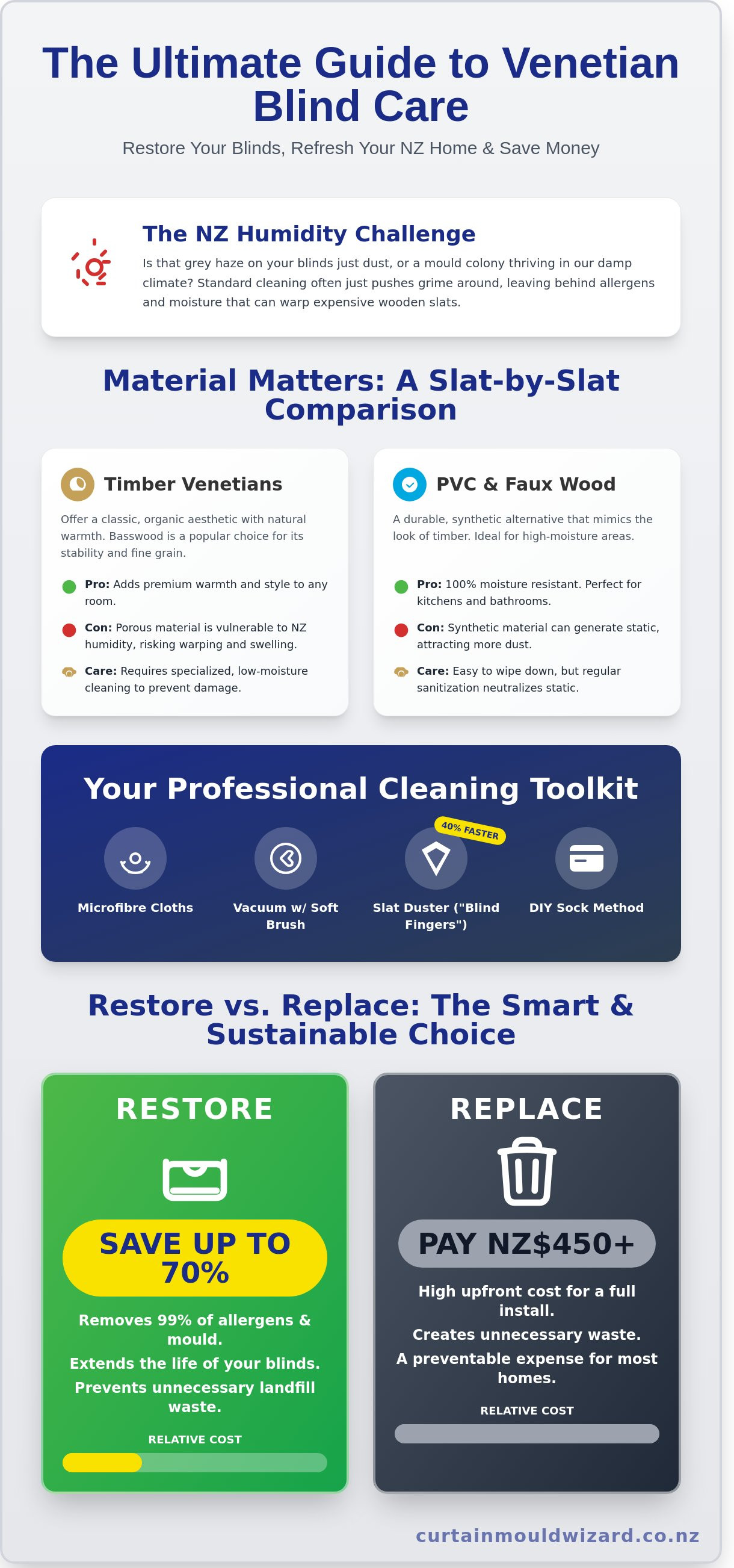
By 2026, the "Restore vs. Replace" philosophy has gained massive traction across the country. High living costs and a collective shift toward sustainability mean homeowners now prioritize professional cleaning over buying new. Throwing away a functional set of blinds because of dust or light mould is a waste of money and resources. Restoring your venitian blinds saves up to 70% of the cost of total replacement. Our specialized restoration process removes years of grime and allergens, giving your home a fresh, breathable feel without the hefty price tag of a full install. It is a smart financial investment that prevents unnecessary landfill waste.
The Classic Look of Timber Venetians
Timber venetians offer an organic aesthetic that adds warmth to any room. Most high-end installations in New Zealand use Basswood, a lightweight and stable hardwood known for its fine grain and resistance to warping. However, natural timber remains vulnerable to the high humidity levels found in coastal areas like Auckland. Real wood absorbs moisture, which leads to swelling or finish degradation if left untreated. Because of this porous nature, timber requires specialized, low-moisture cleaning methods to prevent water damage to the grain.
PVC and Faux Wood: The Durable Alternative
PVC and Faux Wood slats are the go-to choice for NZ bathrooms and kitchens. These materials mimic the look of real timber but offer total moisture resistance, making them perfect for high-steam environments. They won't rot, peel, or warp when exposed to water splashes. While they are incredibly durable and easy to wipe down, they have one specific quirk. The synthetic material often generates a small electrical charge, making them prone to static dust buildup. Regular professional sanitization helps neutralize this charge and keeps your surfaces cleaner for longer.
Essential Tools for Cleaning Venetian Blinds
Gathering the right equipment is the first step toward achieving a professional-grade finish. You don't need a massive budget to maintain your window treatments, but you do need tools that respect the delicate surface of each slat. Start with a basic kit featuring high-quality microfibre cloths, a vacuum with a soft brush attachment, and a mild, pH-neutral detergent. These basics handle 90% of daily dust and light debris.
Efficiency matters when you're tackling an entire house. Specialized tools like three-pronged slat dusters or "blind fingers" allow you to clean multiple surfaces in a single swipe, cutting your cleaning time by roughly 40%. Avoid abrasive scrubbers or harsh chemical scourers at all costs. These materials can strip the protective UV coating or paint from your venitian blinds, leading to premature fading and structural damage. Our goal is to restore your blinds to their original glory, not cause a need for an early replacement.
Dry Cleaning vs. Wet Cleaning
Weekly maintenance relies on dry methods to keep dust from settling. Use an ostrich feather duster or your vacuum's lowest suction setting to lift loose particles. This quick habit prevents the buildup that leads to heavy staining. You'll know it's time for a deep, wet-clean intervention when the slats feel tacky to the touch or show visible grey spotting.
For a clever DIY hack, try the "sock method." Slip an old, clean sports sock over your hand like a puppet, dip your "fingers" into a cleaning solution, and run them along each slat. This gives you tactile control and ensures you reach the edges where dust likes to hide. If you discover dark spots that won't budge, it is vital to safely remove mould from your home before the spores spread to your carpets or drywall.
The Role of Specialized Solutions
Standard dish soap often fails against the unique environmental grime found in New Zealand homes. Our high humidity levels mean that simple dust often turns into a sticky paste that binds to the slat surface. Using specialized, non-toxic sanitisation solutions ensures you're actually eradicating bacteria and fungal spores rather than just moving them around. This approach creates a healthier, breathable environment for your family.
Professional-grade DIY results are easier to achieve when you use the right chemistry. We recommend using Curtain Wizard products to tackle stubborn residues without damaging the environment. As a 100% New Zealand owned and operated specialist, we focus on the "Restore vs. Replace" philosophy. Investing in the right solutions today prevents the unnecessary waste of sending salvageable blinds to the landfill. If the grime feels overwhelming, consider a quick consultation with a specialist to get your home hygiene back on track.
Step-by-Step: How to Clean Venetian Blinds Without Taking Them Down
You don't need to dismantle your window treatments to achieve a professional finish. Most homeowners waste 45 minutes per room unhooking hardware, but you can get better results by keeping your venitian blinds exactly where they are. This approach protects the integrity of the mounting brackets and prevents the accidental snapping of delicate components. Follow this methodical process to revitalise your space without the heavy lifting.
Start by closing the slats so they sit flat against each other. This creates a solid, uniform surface for cleaning. Use a high-quality microfibre cloth or an ostrich feather duster to perform a top-to-bottom dry sweep. Gravity is your biggest enemy here, so starting at the top ensures you don't drop debris onto sections you've already finished. Once the first side is clear, rotate the slats 180 degrees and repeat the process on the reverse. This initial dry pass removes 90% of loose allergens and dust spores before they can turn into a muddy paste when moisture is introduced.
- Spot Treatment: Identify individual fly spots or greasy marks. Apply a damp cloth with a drop of mild, pH-neutral detergent directly to the stain.
- Moisture Control: Never saturate the slats. Timber variants can begin to warp if moisture sits for longer than 120 seconds.
- Immediate Drying: Use a fresh, dry cloth to buff each slat immediately after spot cleaning to prevent water spotting and mineral build-up.
Cleaning Aluminium Venetians
Aluminium slats are often as thin as 0.16mm, making them incredibly prone to permanent creasing if handled roughly. When cleaning these in a kitchen environment, you'll likely encounter sticky grease that bonds with household dust. Use a 5% solution of dish soap and warm water to break down these lipids. To ensure a streak-free finish on metallic surfaces, wipe in one continuous horizontal motion rather than scrubbing in circles. This technique mimics professional restoration methods and maintains the factory shine of your venitian blinds.
Pro-Tip: The "Tumble" Technique
Beginners often miss the 5mm to 8mm of material that overlaps when the slats are closed. To fix this, use the "Tumble" technique: tilt the slats to a 45-degree angle. This exposes the hidden edges and the ladder cords that hold the blind together. Wipe the cords with a dry cloth first, as these fabric elements trap more dust than the slats themselves. "Eliminating the dust trapped in the hidden overlap prevents the immediate re-soiling effect that occurs the moment you first adjust your blinds for light." This simple adjustment keeps your windows looking cleaner for 30% longer than a standard surface wipe.
Dealing with the Damp: Removing Mould and Stubborn Grime
Living in Auckland or Northland means battling relative humidity levels that frequently exceed 80% during the damp winter months. This moisture settles on cold window panes, creating a perfect breeding ground for fungi on your venitian blinds. Mould isn't just a cosmetic issue. It's a biological hazard. Data from the Asthma and Respiratory Foundation NZ shows that over 700,000 Kiwis take medication for respiratory disease. Leaving live spores on your window treatments contributes directly to poor indoor air quality and can trigger serious health reactions.
Many homeowners think a quick wipe with a damp cloth solves the problem. It doesn't. Surface cleaning often just spreads the spores or leaves the microscopic roots intact, leading to visible regrowth within weeks. True spore eradication is the only way to ensure a healthy home environment. Stop assuming your mouldy blinds are a lost cause. Landfills in New Zealand are already burdened with household waste, and replacing custom window treatments can cost thousands of dollars. Restoration is the smarter, more sustainable path for your wallet and the planet.
Identifying Mould on Different Surfaces
Mould behaves differently depending on the material of your venitian blinds. On PVC slats, it usually appears as grey or black speckles that sit on the surface but can become etched if left too long. Timber is different. Because timber is porous, the spores penetrate deep into the pores of the wood, making them much harder to reach with standard cleaners. Black mould is particularly aggressive on the string ladders and cords. If you don't intervene, the fungi eat into the fabric fibres, weakening the strings until they snap. For those dealing with heavy infestations on fabric-based window coverings, read our guide on Mould Removal Auckland for specialized restoration advice.
The Curtain Wizard Method for Blinds
We developed our 1L Mould Remover to tackle these tough spots without the need for aggressive scrubbing. Scrubbing is a mistake. It often scratches the delicate UV-protective finish on your slats, which actually makes it easier for mould to grip the surface in the future. Our "no-scrub" formula works on contact to neutralise spores and lift stains. It's designed to be safer for family homes than industrial-strength bleach, which can off-gas harsh fumes for days. You simply apply the solution specifically to the affected slats, let the magic happen, and watch the grime vanish. This process revitalises your home's aesthetic while providing the peace of mind that your family is breathing clean, fresh air.
Restore vs. Replace: Extending the Life of Your Window Treatments
Choosing to restore your venitian blinds isn't just about saving money; it's a commitment to your home's health. A single custom window treatment in New Zealand can easily set you back NZ$500. Compare that to a specialized NZ$30 cleaning solution. You keep NZ$470 in your pocket and prevent bulky materials from entering New Zealand's waste stream. Our local landfills are already under pressure. Opting for restoration over replacement helps reduce the millions of tonnes of waste New Zealanders generate every year. It's a smart, sustainable Kiwi choice that protects both your wallet and the environment.
Stick to a simple seasonal rhythm to maximize the life of your window treatments:
- Spring: Perform a deep sanitisation to remove any mould spores that thrived during the damp winter months.
- Summer: Focus on dusting slats every fortnight to prevent New Zealand's high UV levels from baking grime into the finish.
- Autumn: Check cords and mechanisms for wear. Give them a final wipe-down before humidity levels rise again.
When is it Time to Replace?
Cleaning should always be your first step. Most homeowners are shocked at how a professional-grade treatment makes old slats look brand new. You don't need to buy new when you can revitalise what you already own. However, you should consider replacement if you see genuine structural failure. This includes snapped slats, frayed internal cords that won't lift, or a seized tilting mechanism. If the bones are good, the blind is savable. Regular maintenance ensures these mechanical parts don't have to struggle against layers of sticky grime, which prevents premature snapping and wear. Think of cleaning as preventative medicine for your windows.
The Satisfaction of a Clean Home
A clean home feels different. Removing visible mould and hidden allergens from your venitian blinds does more than just tidy a room; it purifies the air you breathe. Mould spores are notorious for triggering respiratory issues and lingering allergies. When you eradicate these spores at the source, you create a breathable, fresh environment that feels truly healthy. It's the Wizard way of looking after your living space. Take pride in your home and enjoy the immediate relief that comes with a healthy, revitalised environment. Stop the stress of mould growth and reclaim your windows today.
Final Step: Order your DIY Mould Remover Kit and start your restoration today.
Enjoy a Healthier Home with Sparkling Clean Windows
Maintaining your window treatments doesn't have to be a daunting chore. By using the right tools and a consistent cleaning schedule, you'll prevent dust from hardening into stubborn grime. Remember that early intervention is vital in New Zealand's damp climate. Catching mould before it spreads saves you from the high cost of full replacements and keeps your indoor air quality high. We've been a family-owned NZ business since 2012, and we've helped thousands of local homeowners revitalise their interiors with professional-grade results.
Our specialized no-scrub formula is designed to protect delicate finishes while eradicating spores instantly. You can easily extend the life of your venitian blinds without the stress of manual scrubbing or the risk of damaging your hardware. Take the first step toward a fresher, breathable living environment today. It's time to stop worrying about grime and start enjoying the view. Restore your blinds today with our 1L Mould Remover Kit and experience the Wizard difference in your own home.
Frequently Asked Questions
How do you clean venetian blinds without taking them down?
Close your slats flat and wipe them with a microfibre cloth or vacuum them using a soft brush attachment. Start at the top and work your way down to prevent dust from falling on clean areas. For stubborn spots, use a damp cloth with a drop of mild detergent. This method protects your headrail brackets from the wear and tear of frequent removal.
Can I use vinegar to clean my venetian blinds?
Yes, a 50/50 mix of white vinegar and warm water works well for cutting through grime on PVC or aluminium venetian blinds. It's a non-toxic way to sanitise surfaces and kill surface bacteria. Don't use this on real timber, as the acidity can dull the finish over time. Always dry the slats immediately to prevent unsightly water spots or streaks.
How do I remove black mould from my white PVC blinds?
Use a specialised mould eradicator or a 10% bleach solution to kill spores on contact. Apply the solution, let it sit for 5 minutes, and wipe it clean with a fresh cloth. In New Zealand, 45% of homes experience dampness that leads to this exact issue. Professional sanitisation ensures the mould doesn't return by removing deep-seated spores that standard wiping often misses.
Is it safe to wash venetian blinds in the bathtub?
You can soak PVC and aluminium blinds in a bathtub, but never submerge wooden or motorised versions. Use warm water and a mild detergent to loosen built-up grease and outdoor pollutants. Rinse them thoroughly and hang them outside in the shade to dry completely. Ensure the internal cord mechanisms are bone dry before re-hanging them to prevent rust inside the headrail.
How often should I clean my venetian blinds in a damp climate?
Dust your slats every 14 days and perform a deep clean every 6 months in humid regions like Auckland or Northland. High moisture levels encourage spore growth on organic dust particles. Regular maintenance prevents the need for a full replacement. Choosing to restore your blinds instead of replacing them can save you hundreds of dollars per room while keeping waste out of NZ landfills.
What is the best way to clean the strings on venetian blinds?
Apply a small amount of shaving cream or fabric spot cleaner to a soft toothbrush to lift dirt from the cords. Gently scrub the length of the string while the blinds are fully extended. Wipe away the foam with a damp cloth and let them air dry. This prevents the strings from fraying or becoming permanently discoloured by hand oils and household dust.
Will mould remover damage the finish on my wooden blinds?
Standard chemical mould removers often contain bleach which will strip the stain or paint from timber venetian blinds. Use a pH-neutral wood cleaner instead to protect the integrity of the material. If mould has penetrated the wood grain, professional restoration is required to save the investment. Roughly 30% of wooden blinds are ruined by DIYers using harsh chemicals incorrectly.
How do I stop my blinds from getting dusty so quickly?
Wipe your slats with a used fabric softener sheet to create an anti-static barrier that repels dust. This simple trick reduces dust accumulation by roughly 40% compared to untreated surfaces. Keeping your home's humidity between 30% and 50% also prevents dust from clumping and sticking to the slats. This makes your fortnightly maintenance much faster and more effective.