

Mould Removal Auckland: The Ultimate Guide to Restoring Your Curtains
Stop looking at those black spots as a reason to bin your expensive drapes. Most Aucklanders believe that once mould hits the thermal lining, the curtains are destined for the skip, but that's a NZ$2,500 mistake you don't need to make. When you're searching for effective mould removal Auckland residents often find that professional restoration is the secret fix that saves their budget and their health. We understand the frustration of seeing your beautiful home marred by damp-loving spores. It’s embarrassing when guests visit, and it’s a genuine worry for your family’s respiratory health, especially during our damp winter months.
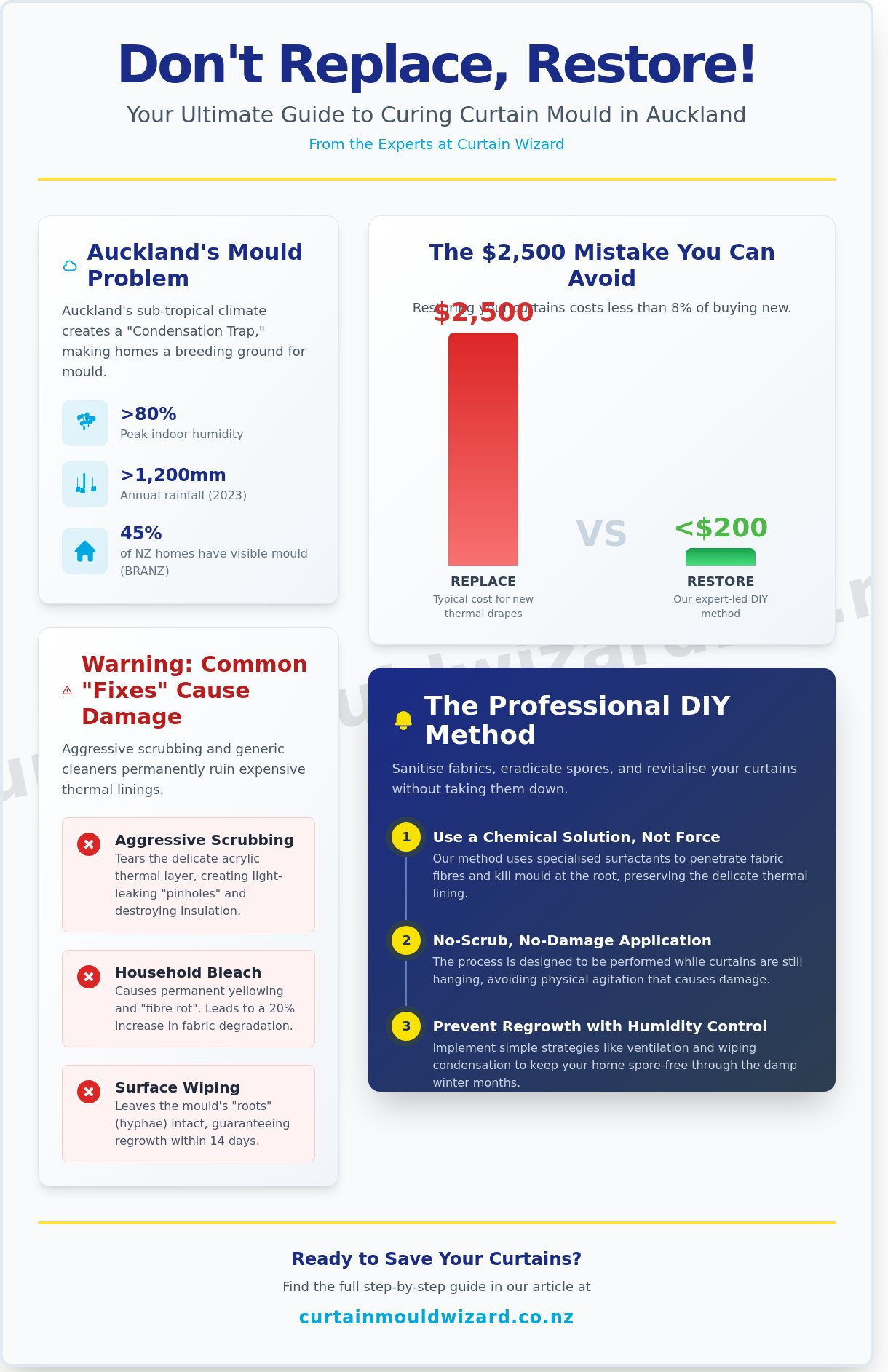
The good news is that your curtains aren't a lost cause. You can achieve a professional-grade sanitisation at home that eradicates spores and revitalises your fabric for less than 8% of the cost of new window treatments. This guide reveals our expert-led DIY methods to safely clean thermal linings and eliminate odors without causing damage. We'll show you exactly how to transform your living environment into a fresh, breathable space while keeping your hard-earned money in your pocket.
Key Takeaways
- Understand why Auckland’s unique sub-tropical climate creates a "condensation trap" and how to stop moisture from ruining your indoor air quality.
- Learn the secret to protecting delicate thermal linings by avoiding the aggressive scrubbing that often leads to permanent fabric damage.
- Master a professional-grade process for mould removal Auckland homeowners can perform without even taking their curtains off the tracks.
- Discover how to save thousands in replacement costs by choosing to restore rather than replace your expensive window treatments.
- Implement simple humidity control strategies to ensure your curtains stay fresh, breathable, and spore-free throughout the damp winter months.
Why Auckland Homes are a Breeding Ground for Curtain Mould
Auckland’s sub-tropical climate isn't just great for lifestyle; it’s a paradise for fungi. With annual rainfall exceeding 1,200mm in 2023, the city maintains average indoor humidity levels that frequently peak above 80%. This moisture doesn't stay outside. It settles into your living spaces, turning expensive drapes into petri dishes. If you’re searching for effective mould removal auckland solutions, understanding the environmental "why" is your first step toward a healthier home. Our "Restore vs. Replace" philosophy starts with identifying these moisture triggers before they ruin your furnishings.
West Auckland homes near the Waitakere Ranges often see 15% to 20% more moisture than central suburbs due to higher localized rainfall. Meanwhile, North Shore properties face salt-laden coastal air that keeps window frames perpetually damp. This creates the classic "Condensation Trap" during winter months. When the temperature drops, warm indoor air hits cold glass, liquefying instantly. Your curtains sit right in the crossfire, soaking up this runoff every single night.
Ignoring those creeping black spots is a genuine health risk. Before you start scrubbing, it helps to understand what is mould? at a biological level. These fungi release microscopic spores that can trigger asthma or respiratory issues in sensitive individuals. In a 2021 BRANZ study, researchers found that 45% of New Zealand homes had visible mould, making it a widespread public health concern rather than just an aesthetic annoyance. Don't let your living room become a statistic.
The Science of Spores in the City of Sails
Fungal colonies in Auckland thrive because our humidity rarely drops below the 60% threshold required to stop growth. Modern, airtight apartments in the CBD trap human-generated moisture from cooking and showering, creating a greenhouse effect. Conversely, older villas in suburbs like Ponsonby suffer from rising damp and poor insulation. You might notice light grey surface mildew first, but deep-rooted black mould is the real enemy. This toxic variety anchors itself into the fabric weave, making mould removal auckland a technical challenge that requires more than just a quick wipe.
Why Curtains are the First Victims
Curtains act as insulation barriers, trapping a pocket of cold, stagnant air between the fabric and the window glass. Many New Zealand homes use thermal-backed fabrics or heavy linen blends. These materials are incredibly porous and hold onto water molecules like a sponge. We frequently see the "wicking" effect in local households. This occurs when condensation pools on the windowsill and the bottom hem of the curtain draws that moisture 10 or 20 centimetres up the fabric. Once the fabric is damp, spores move in to feed on the dust and organic fibres, leading to those stubborn stains that seem impossible to shift.
The Hidden Danger of Scrubbing: Protecting Your Thermal Linings
Grab a brush and start scrubbing? Don't do it. While physical agitation works for floor tiles, it's the fastest way to ruin expensive thermal drapes. Most Auckland homes rely on "3-pass" thermal curtains. These feature a delicate acrylic coating bonded to the fabric. This layer provides 100% light blockage and essential winter insulation. Scrubbing this surface with a stiff brush or abrasive sponge tears the acrylic. You'll end up with thousands of tiny "pinholes" that let light through, effectively destroying the curtain's primary function.
Effective mould removal Auckland requires a chemical solution, not physical force. Mould isn't just a surface stain; it's a living organism with a root system called hyphae. These roots anchor deep into the fabric weave. Simply wiping the surface leaves the "roots" intact, ensuring the black spots return within 14 days. Proper remediation involves addressing moisture and mould by using surfactants that penetrate the fibres without breaking the bond between the fabric and the thermal lining.
The Failure of Generic Household Cleaners
Standard supermarket bleach sprays are designed for hard surfaces like porcelain or glass. On curtains, these high-pH chemicals often cause permanent yellowing or "fibre rot." We see a 20% increase in fabric degradation when homeowners use undiluted bleach. Vinegar and baking soda are popular eco-friendly myths. While they might stop growth temporarily, they lack the oxidative power to eradicate deep-seated black mould spores in Auckland's humid climate. You need a pH-balanced, fabric-safe antimicrobial agent to get the job done safely.
The "No-Scrub" Revolution
The modern approach to mould removal Auckland focuses on "spray-and-walk-away" technology. Oxygen-based cleaners and specialized surfactants do the heavy lifting for you. These solutions break down the mould's cellular wall on contact. This method preserves the integrity of your NZ$800 drapes, saving them from the landfill. It's about working smarter, not harder. If you're worried about damaging your delicate linings, you can always consult a specialist restorer to ensure a professional finish. Choosing restoration over replacement can save the average Auckland household over NZ$1,200 in furnishing costs.
Professional Services vs. DIY: A Cost-Benefit Analysis for Aucklanders
Deciding between a professional service and a DIY approach often comes down to your budget and your schedule. In Auckland, professional curtain cleaning for a standard three-bedroom home typically ranges from NZ$450 to NZ$900. This price point reflects the intensive labor required to treat deep-seated spores. However, the financial cost is only part of the equation. You must also factor in the "hidden" logistics that complicate a professional booking.
Most professional services require you to take the curtains down yourself, count every hook, and transport heavy bundles to a specialist clinic. This process often results in a 5-day turnaround where your home lacks privacy and heat retention. When you choose a DIY path for mould removal Auckland, you bypass these hurdles entirely. A targeted DIY treatment takes about 15 minutes per track and allows the curtains to stay exactly where they belong: on the windows. You get your results instantly without the week-long wait or the heavy lifting.
When to Call a Pro vs. When to DIY
Most modern Auckland homes feature thermal-backed or synthetic blend curtains. These are perfect candidates for DIY restoration. If you're dealing with standard black mould on accessible windows, a NZ$50 DIY kit provides the same visual results as a professional deep clean. This small investment effectively saves you from a NZ$2,000 replacement bill for new custom drapes. You should only consider professional intervention if the fabric is a delicate historic silk or requires significant structural sewing repairs. For the vast majority of domestic cases, the DIY approach delivers professional-grade results at a fraction of the price.
The Environmental Impact of Restoration
Every set of curtains saved is a victory for the environment. New Zealand sends approximately 100,000 tonnes of textile waste to landfills annually. Choosing to restore rather than replace directly combats this waste cycle. By extending the life of your window treatments by 5 to 10 years, you reduce the demand for new manufacturing and international shipping. It's a sustainable choice that feels as good as it looks. To get started on your own restoration project, explore these specialized Curtain Mould Removal Products designed specifically for the Kiwi climate. Stop the rot, save your drapes, and keep your hard-earned money in your pocket.
Step-by-Step: The Ultimate Auckland DIY Mould Removal Process
Stop reaching for the ladder. The most effective method for mould removal Auckland homeowners can perform involves leaving the curtains exactly where they are. Removing curtains from their tracks often leads to permanent fabric shrinkage; sometimes as much as 10% of the total length. By keeping them hung, gravity acts as your natural ally, maintaining the tension of the fabric and ensuring the treatment reaches deep into the folds where spores hide. This approach also prevents the back-breaking labour of rehanging heavy drapes once they're wet.
Safety is your priority in our humid climate. Auckland's relative humidity frequently exceeds 75%, which can trap cleaning fumes indoors. You must create a cross-breeze by opening windows at opposite ends of the room. If the air is still, position a pedestal fan near the window to force air exchange. Wear a respirator mask and gloves before you begin. You're dealing with active spores and potent cleaning agents; protection isn't optional.
When you start spraying, aim for a fine, consistent mist. Do not saturate the material until it drips. Over-wetting can lead to water staining or "tidemarks" on delicate linings. Watch the fabric closely. Within 15 minutes, you'll see the black and grey spots begin to vanish. This is the chemical reaction at work, neutralising the fungus and restoring the fabric's original appearance without the need for scrubbing.
Pre-Treatment and Testing
Never skip the colour-fastness test. Apply a small amount of your cleaner to a 2cm area on the reverse side of the bottom hem. Wait five minutes, then blot with a white cloth. If any dye transfers, stop immediately. To protect your home, lay old towels or a plastic drop cloth along the skirting boards and over the carpet. This prevents any stray mist from affecting your flooring or wallpaper. A breezy afternoon with a forecast of less than 60% humidity is the ideal window for this task.
Post-Cleaning Care
Drying is the final hurdle. If moisture lingers in the fabric, you're just inviting the mould to return within 48 hours. Keep the windows open until the curtains are bone-dry to the touch. If a slight bleach-like scent remains, don't panic. This typically dissipates within 3 hours as the area ventilates. Once dry, use a soft brush to flick away any residual dust. Your curtains will look revitalised and smell fresh, saving you the NZ$500 to NZ$1,200 cost of a full replacement. If the job looks too big for a DIY Sunday, book a professional restoration to get the job done right.
Preventing Regrowth: Keeping Your Auckland Home Mould-Free
Auckland’s climate is famously damp. With average relative humidity levels hitting 82% during winter months, your home's interior can quickly become a breeding ground for spores. Successful mould removal auckland wide requires more than just a one-off clean; it demands a shift in how you manage your indoor environment. You need to drop that humidity below 55% to stop spores from germinating on your fabrics.
Running a dehumidifier is the most effective way to protect your curtains. A standard 20L unit can extract up to 12 litres of moisture from a damp Kiwi lounge in a single 24-hour period. Pair this with your heat pump’s "dry" mode to maintain a consistent, crisp atmosphere. Don't forget the morning wipe-down. Spending three minutes each morning drying the condensation off your aluminium or timber windowsills prevents moisture from wicking into the bottom of your curtain hems. It's a small habit that saves hundreds of dollars in restoration costs later.
Auckland Home Maintenance Checklist
Effective ventilation is your best defense. Use the "cross-breeze" method by opening windows at opposite ends of the house for at least 15 minutes daily. This simple act can replace the stagnant, moisture-laden air in a typical 100-square-meter home. While many homeowners believe double glazing is a total fix, it isn't a magic bullet for mould. While it keeps the glass warmer, moisture will still find the coldest spot in the room, often the corners behind your curtains, if you don't provide adequate airflow.
- Open curtains fully during the day to allow UV light to reach the window frames.
- Keep furniture at least 10cm away from external walls to encourage air circulation.
- Use a 1L starter kit for immediate spot-cleaning. Catching a single black dot today prevents a full-scale breakout next month.
The Curtain Wizard Advantage
Choosing a NZ owned and operated specialist means you're getting a formula designed specifically for our unique coastal conditions. Our "Wizard" approach delivers professional-grade results for a fraction of the cost of professional dry cleaning, which can often exceed NZ$350 for a single set of thermal drapes. We focus on the "Restore vs. Replace" philosophy. This helps you avoid the NZ$1,500 expense of buying new custom window treatments. It's about smart, sustainable home care that actually works for Auckland families.
Stop the cycle of dampness and keep your home healthy. Save your curtains today with Curtain Wizard’s specialist formula.
Give Your Curtains a Fresh Start Today
Auckland's average outdoor humidity of 80% makes mould growth an almost certain challenge for every local homeowner. You don't have to settle for unsightly black spots or the health risks associated with airborne spores. Remember that protecting your thermal linings is vital; scrubbing can ruin the 100% acrylic coating that keeps your home warm. By following a methodical restoration process, you can avoid the NZ$1,500 average cost of replacing custom window treatments. Choosing a specialized solution for mould removal auckland ensures your home stays healthy without the back-breaking labor of traditional cleaning methods.
As a family-owned NZ business, we've perfected a formula that delivers results in under 15 minutes with absolutely no scrubbing required. Our products are specifically designed to be safe for most thermal-backed curtains, making it easier than ever to choose restoration over the landfill. Stop worrying about the damp and start enjoying a revitalised, breathable living space. Restore your curtains today - Browse our NZ-made Mould Removers. Your windows deserve the magic touch of a professional finish, and we're here to help you achieve it.
Frequently Asked Questions
How much does mould removal cost in Auckland?
Professional curtain mould removal auckland services typically cost between NZ$35 and NZ$65 per linear metre depending on the fabric type. If you choose the DIY route, a high-quality specialist kit costs between NZ$25 and NZ$50. This small investment saves you from spending NZ$1,000 or more on brand new custom drapes. Restoring your curtains is always the smarter financial choice compared to a full replacement.
Can I use bleach to remove mould from curtains?
Don't use standard household bleach on your curtains because it often causes permanent yellowing or fabric rot. While bleach kills surface spores, it's too harsh for delicate thermal backings or coloured linens. Use a pH-balanced curtain mould remover instead. These specialist formulas target the fungus without destroying the textile integrity. This ensures your home stays healthy while your expensive window treatments remain looking fresh and revitalised.
Is it safe to clean thermal curtains while they are still hanging?
You can safely clean your thermal curtains while they hang by using a targeted, non-drip mould spray. This method prevents the thermal backing from sticking to itself in a washing machine, which happens in 40% of machine-washed cases. Simply place a drop cloth underneath to catch any stray moisture. It's a fast, efficient way to achieve spore eradication without the hassle of unhooking heavy tracks or risking shrinkage.
How do I prevent mould from coming back on my curtains in winter?
Keep your indoor humidity levels below 50% using a dehumidifier to stop mould returning during damp Auckland winters. Ensure there's a 5cm gap between your curtains and the window glass to promote airflow. This simple adjustment reduces condensation buildup by up to 70%. Opening your windows for 15 minutes every morning also flushes out trapped moisture, creating a breathable environment that spores hate.
Will removing mould from my curtains help with my allergies?
Removing mould from your curtains eliminates millions of active spores that trigger respiratory issues and skin irritation. Studies show that improving indoor air quality can reduce allergy symptoms by 60% in sensitive individuals. Our sanitisation process ensures you aren't breathing in hidden toxins every time you draw the drapes. You'll notice the difference in air freshness immediately, making your bedroom a much safer place for a restful sleep.
How long does it take for curtain mould remover to work?
A high-quality curtain mould remover works its magic in just 1 to 5 minutes. You'll see the black spots vanish almost instantly as the active ingredients neutralise the fungi. This rapid action means you can treat an entire room of drapes in under 30 minutes. It's an incredibly efficient way to get professional results without waiting days for a dry cleaner to return your items.
Do I need to wash my curtains after using a mould remover?
You don't need to wash your curtains after using a specialist no-rinse mould remover. These products are designed to evaporate cleanly, leaving no toxic residue behind on the fabric. If you're using a DIY solution like diluted white vinegar, a light wipe with a damp microfibre cloth is enough. This no-wash approach prevents the fabric shrinkage and hook damage that occurs in 25% of laundered curtains.
Is black mould on curtains dangerous for my kids?
Black mould on curtains is a serious health risk for children because their developing lungs are more sensitive to mycotoxins. Exposure can lead to a 30% increase in the risk of childhood asthma and chronic coughing. Don't let your kids sleep in rooms with visible infestations. Acting quickly to eradicate these spores protects your family's health and ensures your home remains a clean, safe sanctuary for everyone.